What Does It Mean to Be "In Recovery" Anyway?
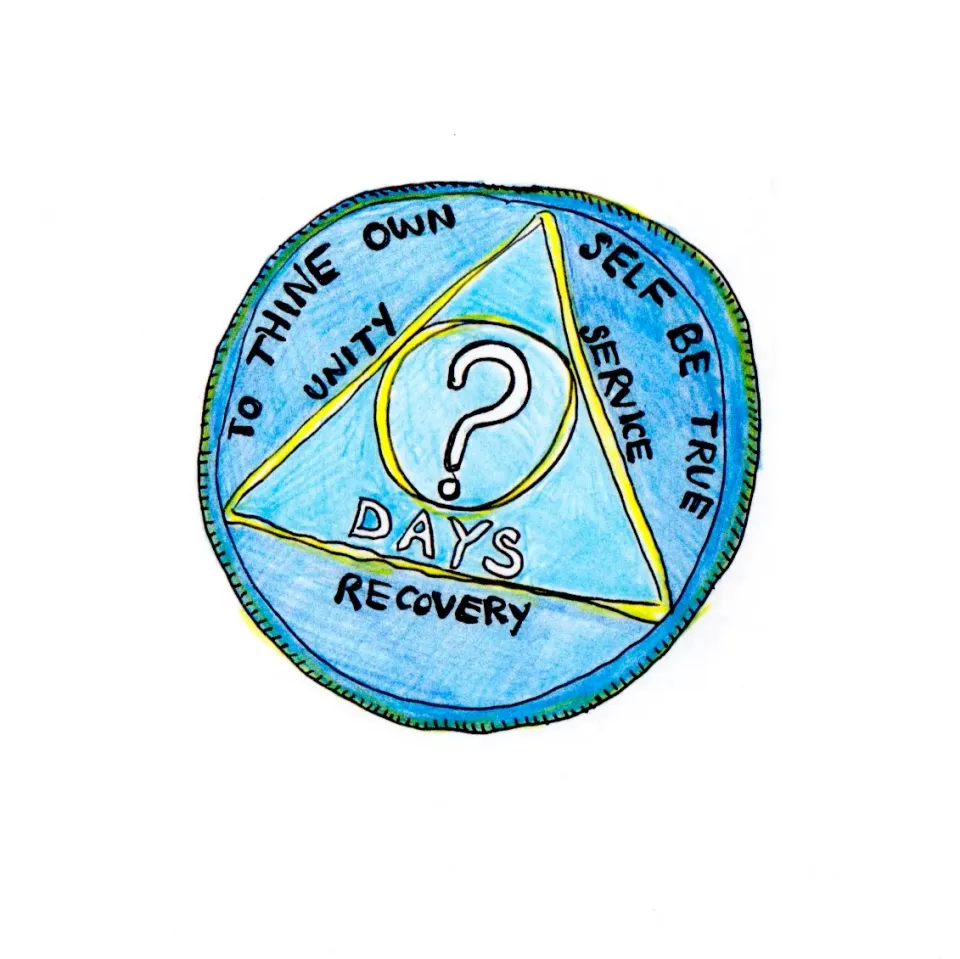
Impostor syndrome, but for slowly killing yourself.
This was originally published on The Small Bow, AJ Daulerio's exceptional newsletter ab0ut addiction and recovery and all points in between.
A few years ago when I was starting to stop drinking, I’d casually posted a link to a 2021 New Yorker story by John Seabrook that was nominally a profile of then nascent NA beer kingpins Athletic Brewing Company, but was also more broadly a rumination on what it means to navigate a long and difficult relationship with alcohol.
For me personally, just a couple months into quitting, the products this particular company was making were enormously helpful in crystalizing what exactly I needed from a drink and what I didn’t, and I’d mentioned as much while sharing the piece, stopping well short of announcing I was quitting drinking or announcing anything, really. In those moments when I could kinda use a beer, I could have one that also wouldn’t make me feel like a loaf of bread was proofing in my stomach and/or make me want to take a nap and/or make me want to drink four more. This was all, I was telling myself at the time, a thought experiment.
For the author, though, the mere notion of a lovingly crafted non-alcoholic beer was fraught with danger: Where would those familiar, skillfully replicated tastes and smells and sensations lead? What long-tamed synapses might they trigger? Could he realistically post up at the bar after work and drink a convincing if chemically harmless pint without awakening a part of himself that he had worked so hard to change—and was even a curious sip worth the risk?
While the quantum leap in fake-beer-that-doesn’t-taste-like-stale-urine technology was objectively impressive, it might be, for some, too impressive, too much like the real thing for comfort. (“The glass fit my palm like a key,” Seabrook writes.) I appreciated this difference and internalized it. When an acquaintance responded to me on the side confessing that he “was in recovery, too,” I flinched. I can’t remember if I hit send on this response but my knee-jerk reaction was, “Oh no, I’m not in recovery, I’m just not drinking anymore.” I’ve thought about this exchange nearly every day since.
I’ve gone to meetings but felt like I was on safari—steeping in the thick fog of empathy and compassion and camaraderie, bearing witness to stories of mundane horror and beauty, but never letting myself feel like more than a witness. I did not feel powerless or want to feel powerless. I did not want to co-opt other people’s trauma or steal valor by putting the end of my 30+ years of what I’d believed to be social drinking on the same plane as their struggles. I wasn’t recovering, I was just ceasing to do a thing that was not good for me and was not adding anything positive to my life. Impostor syndrome, but for slowly killing yourself.
My drinking career was long but undistinguished. I wasn’t often sloppy or blackout, I never broke anything of mine or anyone else’s. Sometimes it was fun or comforting, often it was a thing I just happened to do. I don’t think I ever drank alone—not as part of some closely held belief or conscious self-restraint, it just never occurred to me to do that over three decades of ambivalent indulgence and gradual liver enzyme escalation.
During the pandemic, cracking open a bottle of wine before dinner and then usually a second during seemed at the time to be less official chemical dependence than a way of marking time in an otherwise formless day, over the course of many many formless days. But the 30 pounds I absolutely could not afford to gain didn’t make the distinction. The searing headaches and hangovers I woke up with at three in the morning did not care that they weren’t the byproducts of a good time, or even a bad time. My body was not interested in the difference between casual and crisis and its message was too clear for even me to dismiss.
There wasn’t necessarily a decline, but there was a rock bottom: a nice dinner at our friends’ house during a family road trip that led to me falling asleep by 10 or 11, then subsequently vomiting, on the living room floor. It wasn’t really that kind of night, and yet. While that sounds like a fitting enough “never again” moment of clarity, days passed before the disgust fully settled in. By then it felt less like Quitting than asking myself what it would feel like to just not do something that was equal parts unenjoyable, unhealthy, and expensive. Turns out it felt fine.
So if I didn’t think I was in recovery, what exactly was I in?
Co-opting trauma is something I’ve developed a heightened sensitivity to for a variety of unpleasant reasons. But even still, it’s understood that vicarious trauma can be clarifying and galvanizing in its own way, regardless of how it may look to others—a point of entry for people untouched by a crisis to try and connect to it. Finding just the right combination of fear and confidence can be empowering.
And so it is with the very notion of recovery being a status that needs to be earned: Am I healing from something? Do I need to be? My reservations with the term had, I think, something to do with my interpretation of the stakes. My anxiety, which had tormented me in so many ways, pushing me to do so many things I didn’t need to do and a couple that I did, went AWOL in the rare instances I actually thought about my drinking. Even as my losses in the war against metabolism grew more decisive each year, it took my doing the math on how many bottles of wine, exactly, I’d opened in that year-plus to feel a sense of alarm. But not quite peril.
When my wife and I started dating, she had been smoking a pack and a half of cigarettes a day since she was 14 and watching her try to quit and wrestle with the shame of not being able to quit made my own relationship to cigarettes feel embarrassing by comparison. I could smoke or not smoke, it didn't matter much to me—a thing to do at parties and bars for someone who didn’t really know what to do with himself at parties and bars. I carried my relative lack of dependency like survivor’s guilt.
At this late stage of my life, I have been around enough people with enough addictive behaviors to know that my circumstances and adaptive tendencies may be different from theirs, but I am slowly coming to accept that recovery is not binary or a contest. Everyone is complicated, everything is complicated. There are archetypal narratives that form the pillars of understanding addiction but infinite nuances and variables. Viable models for addiction treatment are less infinite; there is not a bar to clear like a sign by the entry to a roller coaster, Your ACES Score Must Be This High to Change Your Life. There is a point where checking your privilege can lapse into sabotage, where believing your addiction may not be addiction-y enough so you self-disqualify from even talking about a problem, much less acting to fix it.
It has been about three and a half years since I stopped. I don’t know the number of days because I didn’t really know in the moment that I was, like, stopping-stopping so I didn’t note the date or think to start counting. I just kind of didn’t want to do it anymore and that wound up agreeing with me; no part of me put up a fight. It took a week or two for me to tell myself I was turning in my badge and longer before I told anyone else. I’ve had sips of red wine with a nice dinner here and there just to see if it felt like anything and it didn’t; I neither missed it nor felt repulsed by it. There has been an ease to this all that I do not take for granted and makes me feel uncomfortable, especially around friends whose experiences with sobriety have been decidedly less uneventful. My biggest fear isn’t relapse, it’s that my ambivalence can be mistaken for glibness. I understand it’s not a given that this ease is a permanent one.
During this period I also began training to become a therapist and have listened to people with varying degrees of addictive behavior or substance-abuse histories talk about their own skepticism over whether they fit the profile for recovery—the shame of feeling like their stories aren’t story-like enough. While the binary works for some people to change their lives the way they need to—drunk or sober, using or not using, addict or non-addict—others may benefit from the idea of a spectrum, if only to lower the chances of self-disqualifying.
The punchline to the Seabrook story is that during the reporting he tested out tons of non-alcoholic beverages, testing himself and the strength of his resolve in the process—only to wind up breaking 11 years of sobriety because one of the companies accidentally sent him a bottle of actual, non-non-alcoholic Riesling. It’s all so slippery—the boundaries, the nomenclature, the security, the danger. I have not read the Big Book, I have not reckoned with my powerlessness; I feel myself tempting the scorn of those who have.
Quiet-quitting drinking at the dawn of the cultural moment that finds NA products so in vogue and readily available doesn’t feel like a coincidence, really. As Athletic has thrived, countless other not-shitty NA beer brands followed in its wake, to say nothing of the boom in what can best be described as fussy sodas. It turns out that marking, and passing, time during lockdown by recreating the shopping cart scene from Leaving Las Vegas is not a personality quirk, it was a coping mechanism widespread enough to spur an entire industry of artisanal fake booze, marketed directly to me—at me, really—that I might find obnoxious if it didn’t feel instrumental to my being able to make this change in my life feel strangely frictionless.
With that good fortune, however, comes a feeling even more upsetting than impostor syndrome. I’m not co-opting the status or gravitas of the recovery community or stealing valor. I’m not claiming the mantle of addiction to artificially punch up the drama in my own narrative. The truth is perhaps much darker than that: I am a data point in a consumer trend.
Member discussion